Genre: Body horror
Subgenres: Folk horror | Weird fiction | Deep-sea horror / Ocean horror
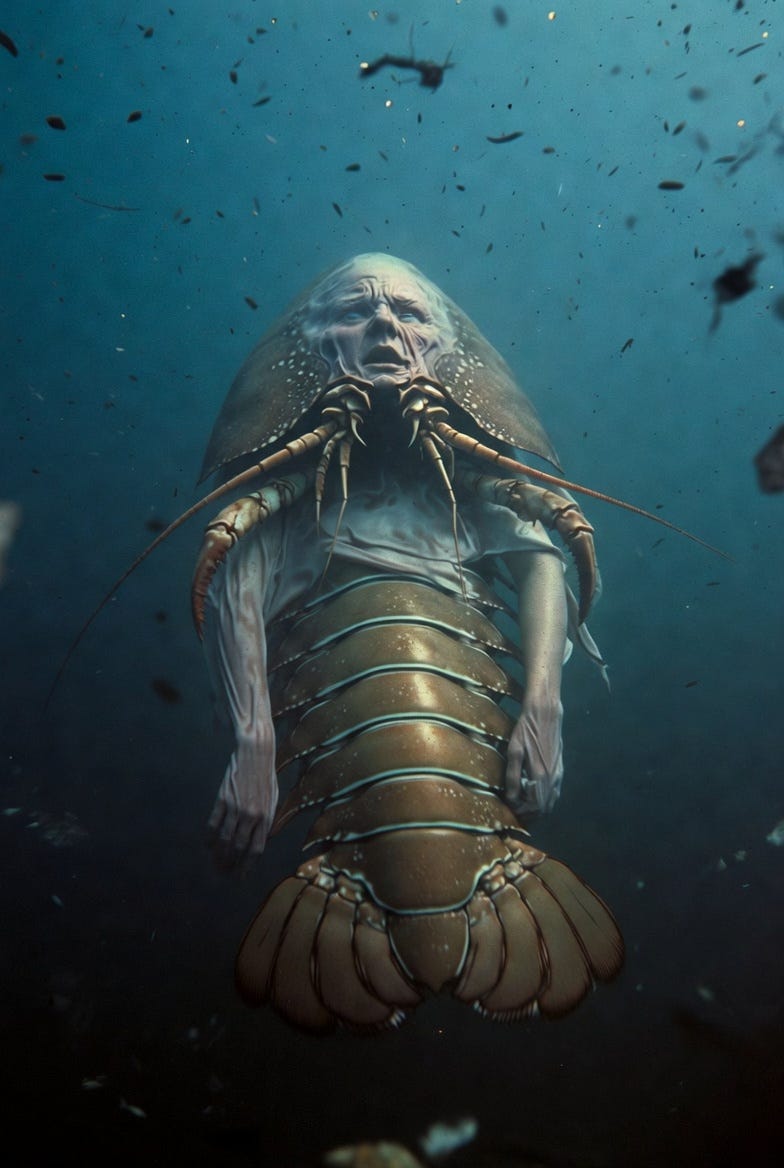
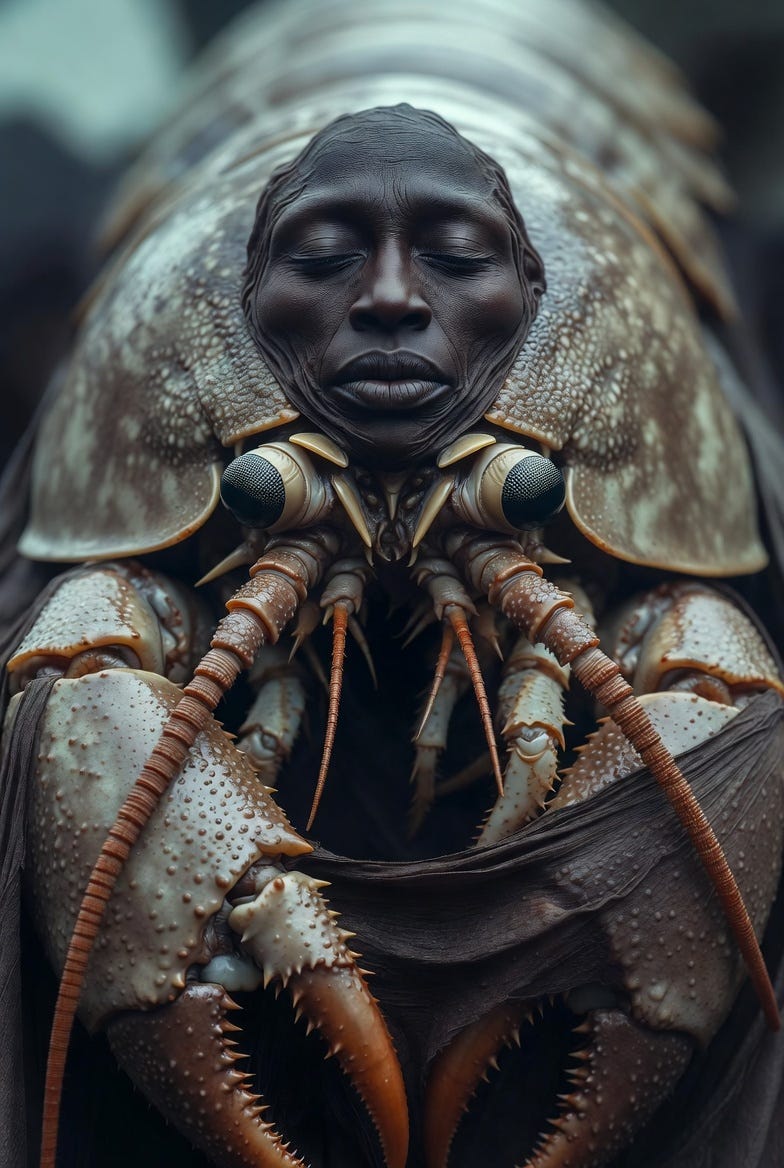
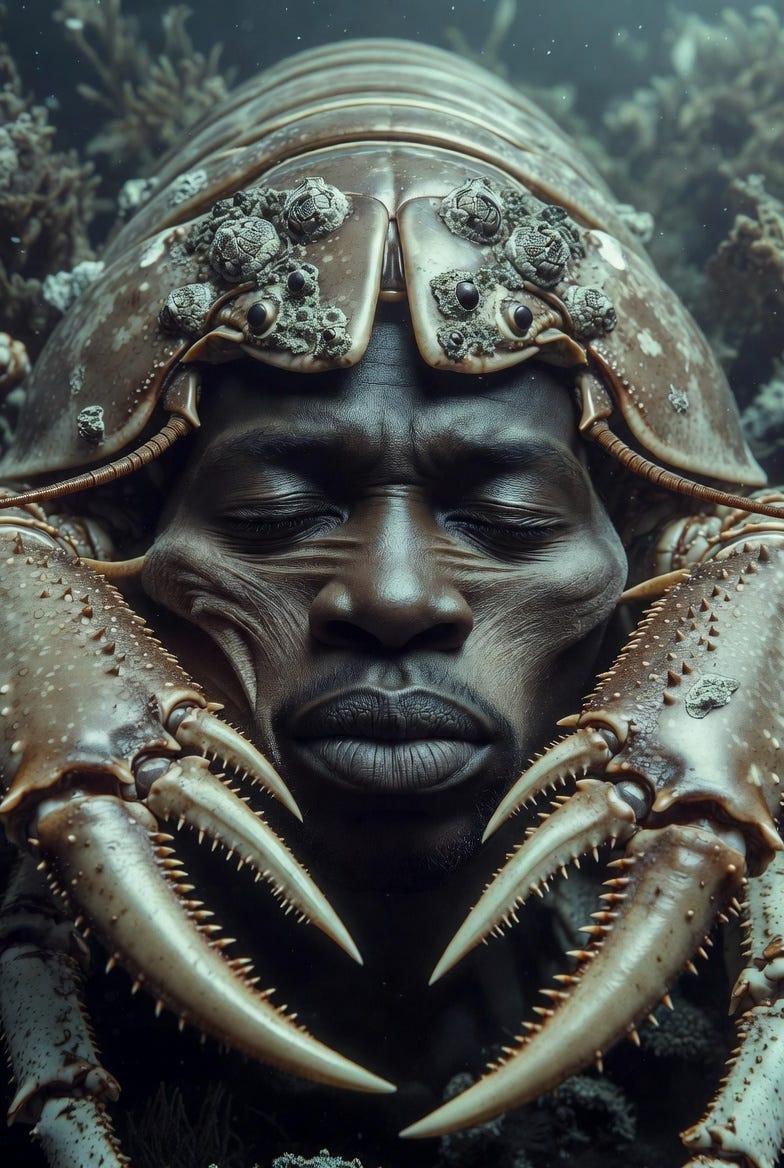
Les Doigts de la Mer Profonde — they wear the skin of sin.
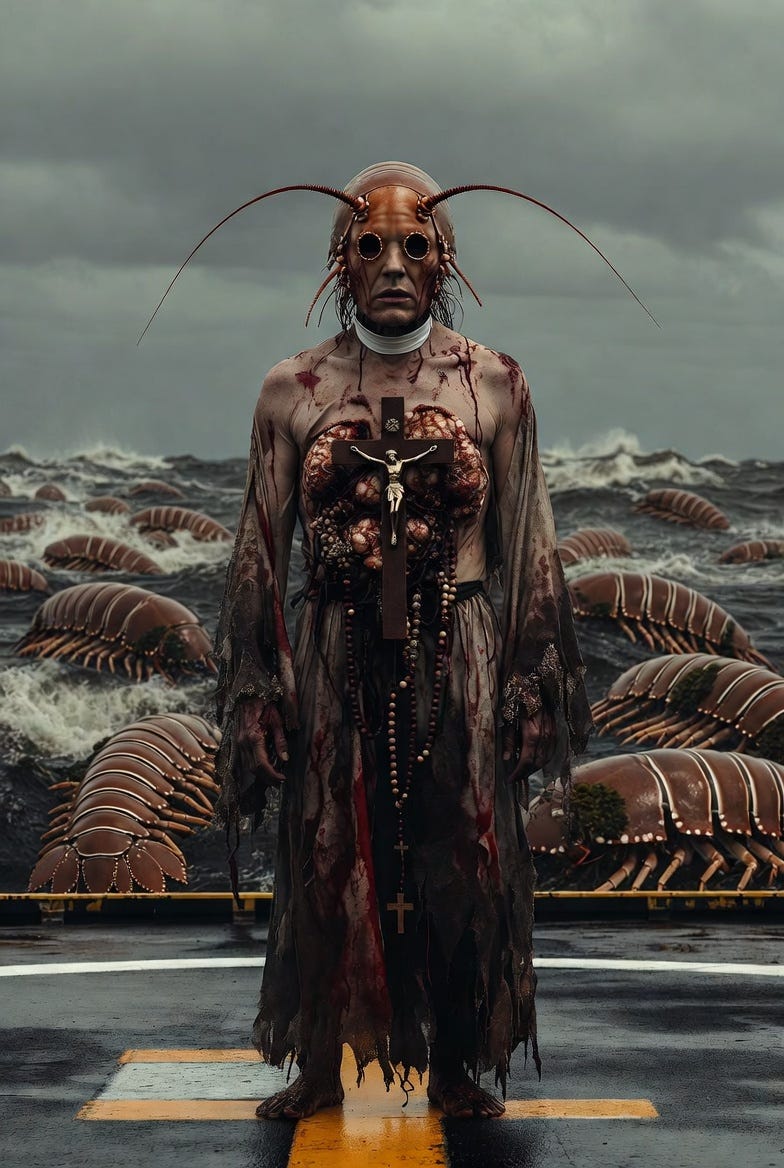
The oil rig Penitence bobbed like a half-drowned sinner twenty miles off the coast of New Orleans in the Gulf of Mexico, far past the shrimp fleets and the safe green shallows. Night pressed down on the Gulf like wet black velvet.

Antoine "Tee" Bodin had drawn the graveyard shift on the ROV deck, nursing a warm Dixie and watching the monitor as the submersible clawed its way down through the thermocline. Corporate wanted another pipeline survey. Tee just wanted the check so he could drink the memory of his wife’s funeral out of his skull.
The camera feed showed the usual gray nothing until 1,800 meters. Then the seafloor bloomed in the floodlights—mud the color of spoiled liver, dotted with whale-fall bones picked clean. And something moved.
Not one. Dozens.

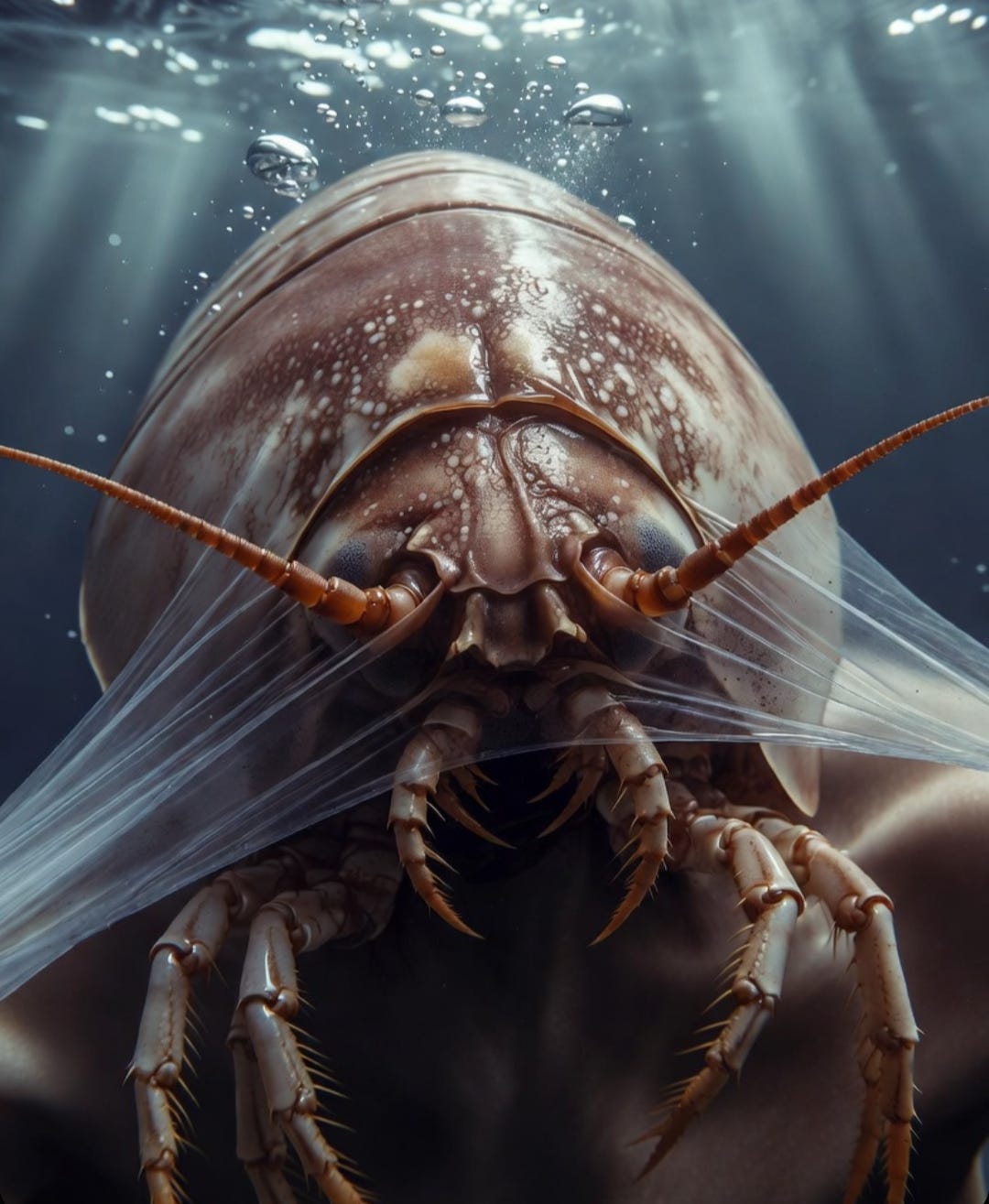
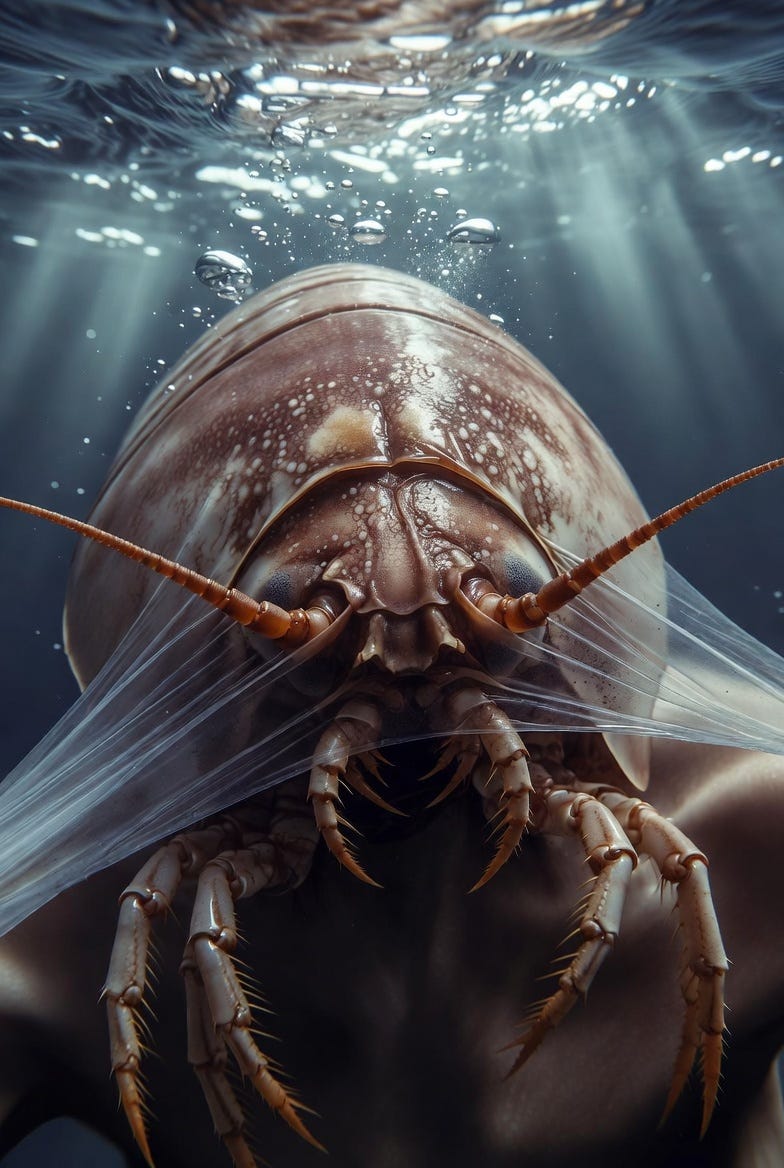
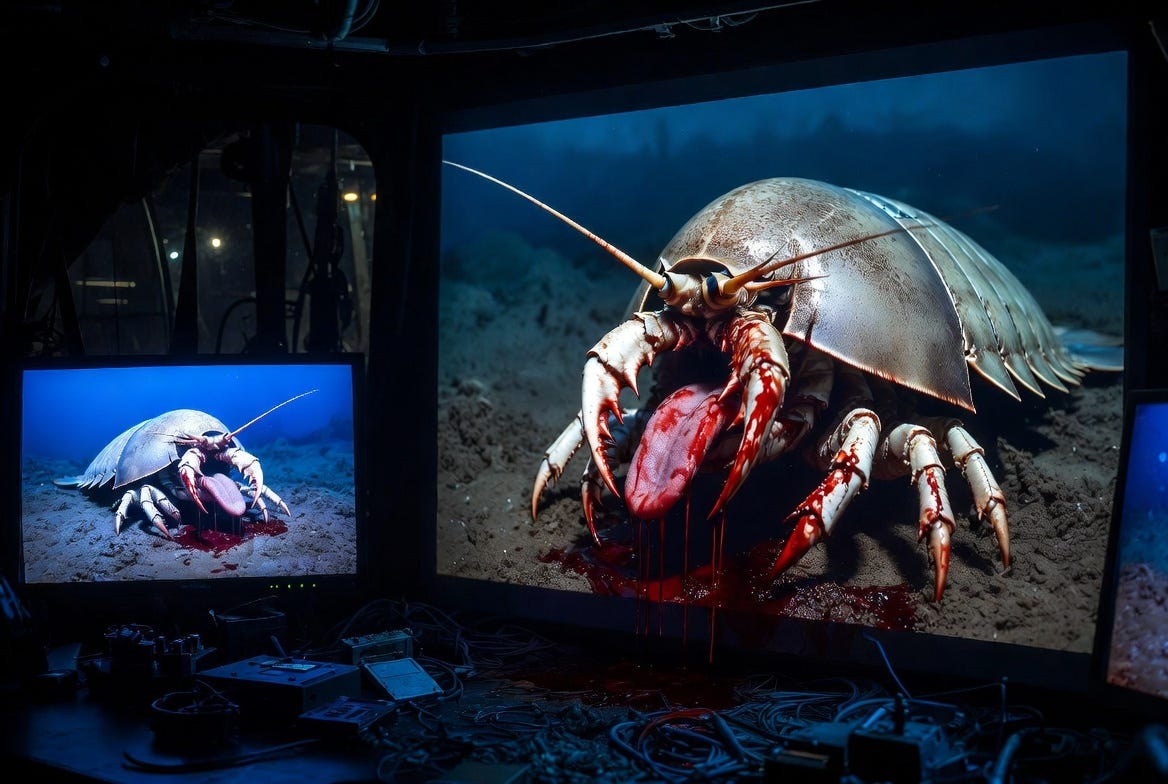
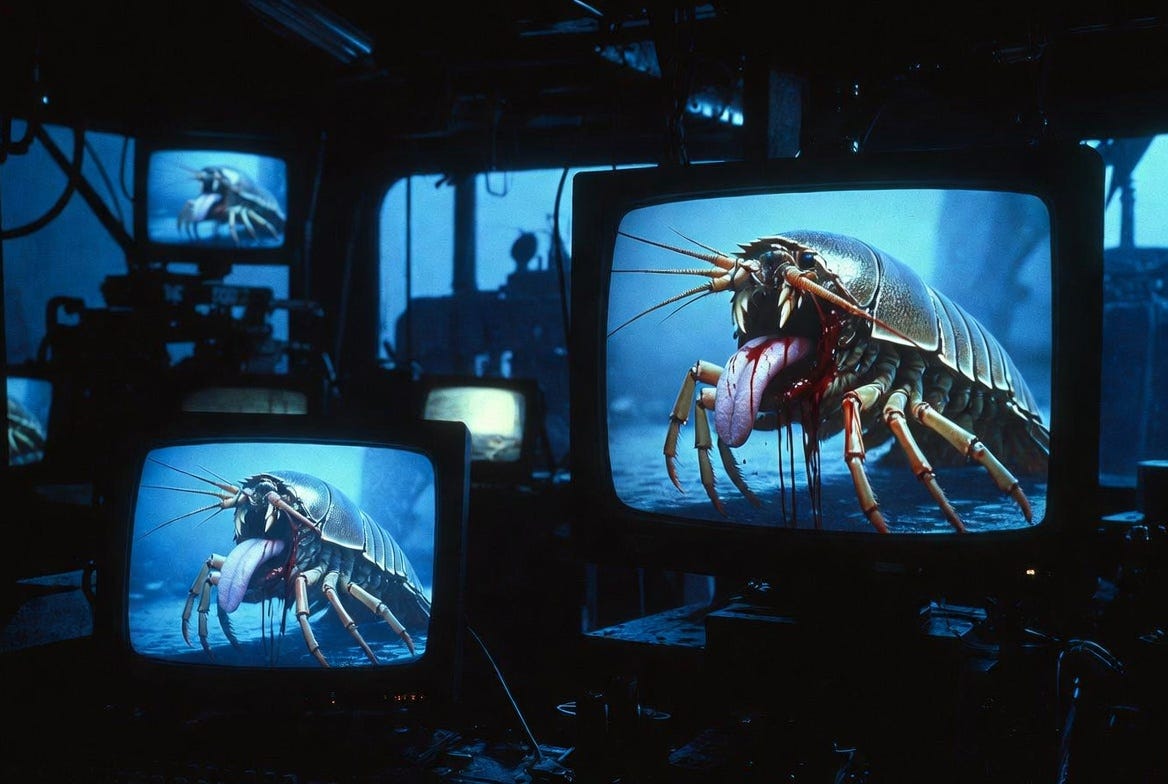
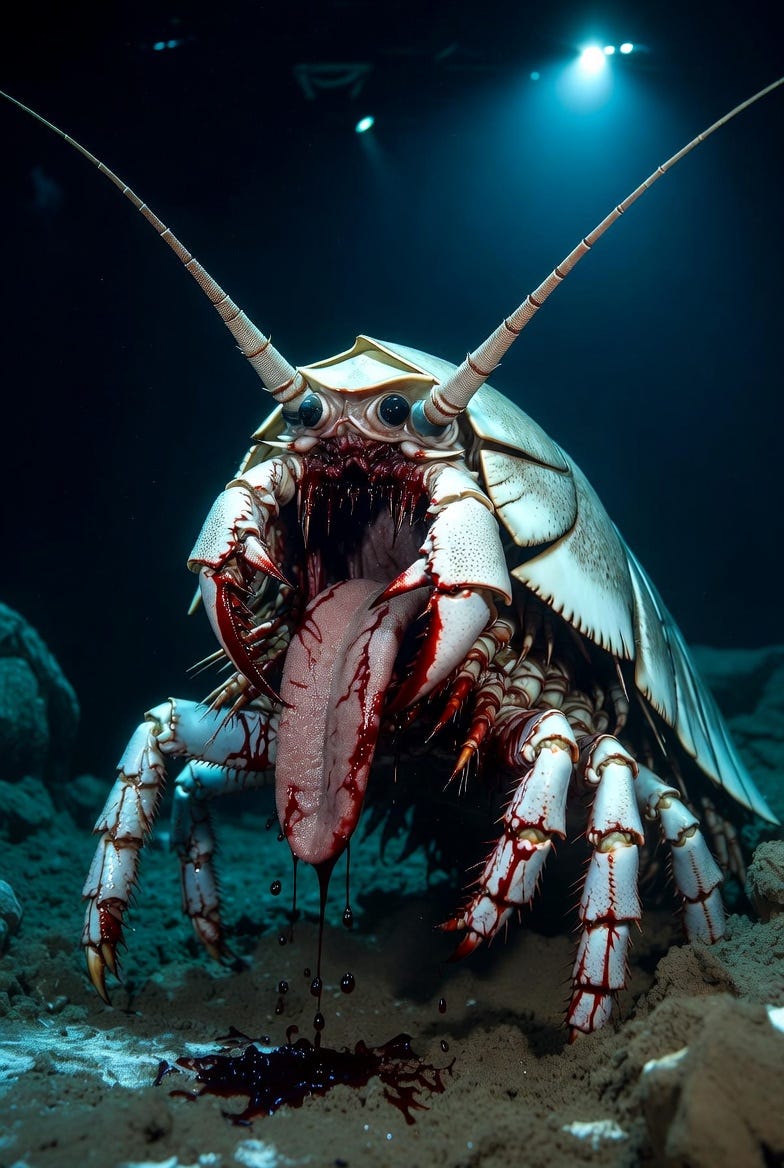
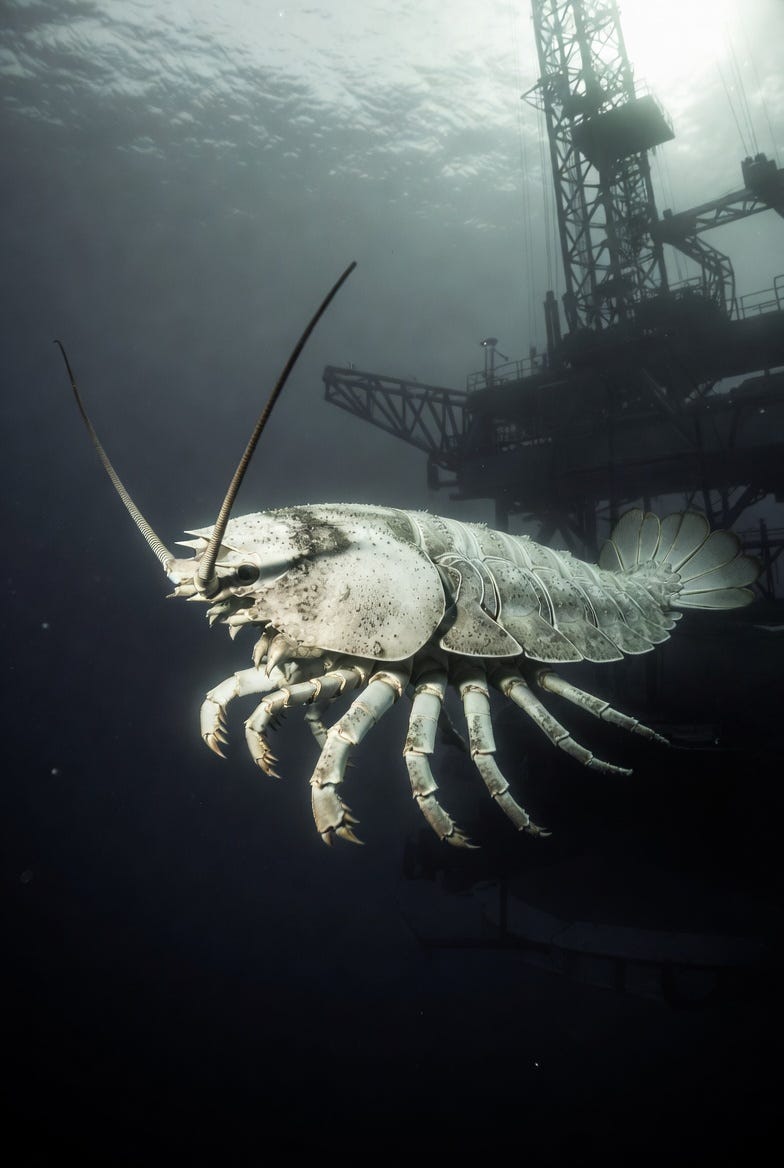
They were the size of Saint Bernards, armored in segmented plates the dull white of drowned bone. Antennae like black whips tasted the water. They rolled and unrolled with lazy, wet clicks, scavenging something that had once worn a yellow survival suit. Tee’s stomach folded in on itself.
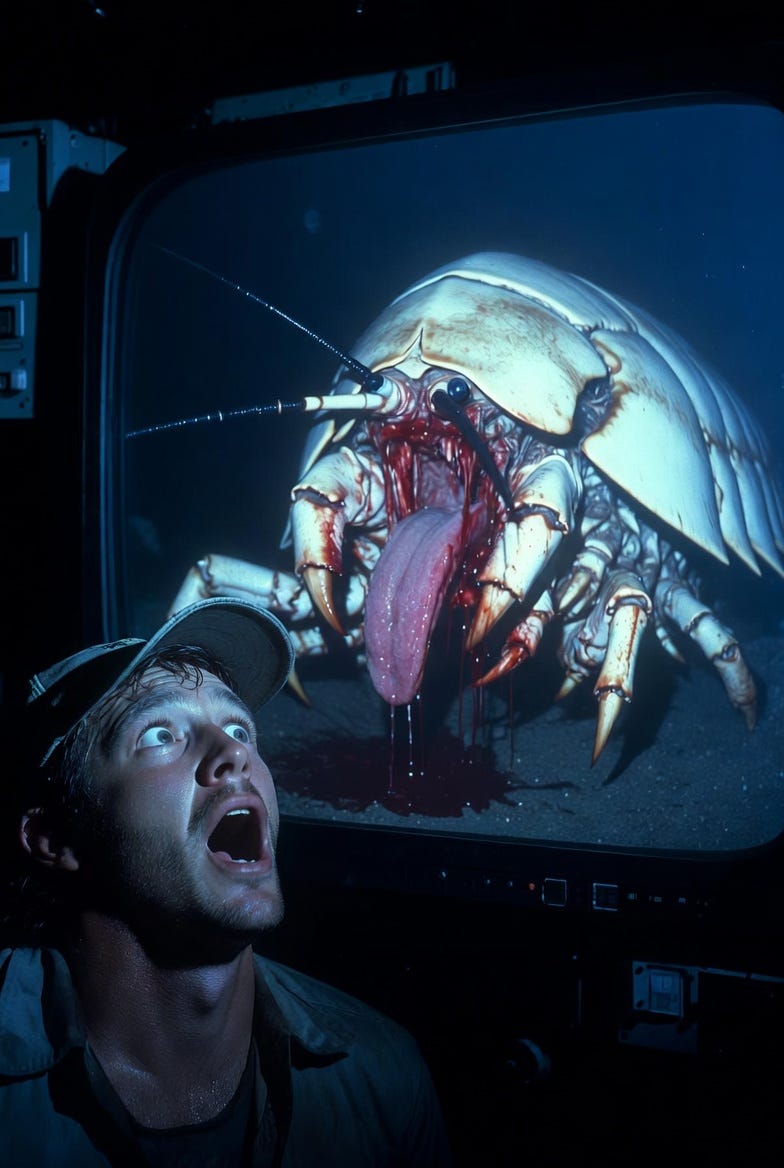
One lifted its head. The mandibles worked. Something pink and soft dangled between them. Tee zoomed in before he could stop himself.
It was a human tongue.
Three nights later the nightmares started.
Only one man came back from the next manned dive. His name was Ricky. He wouldn’t speak for six hours. When he finally did, his voice was wet, like his throat was full of soft mud.
“They ain’t eatin’,” he whispered. “They wearin’.”
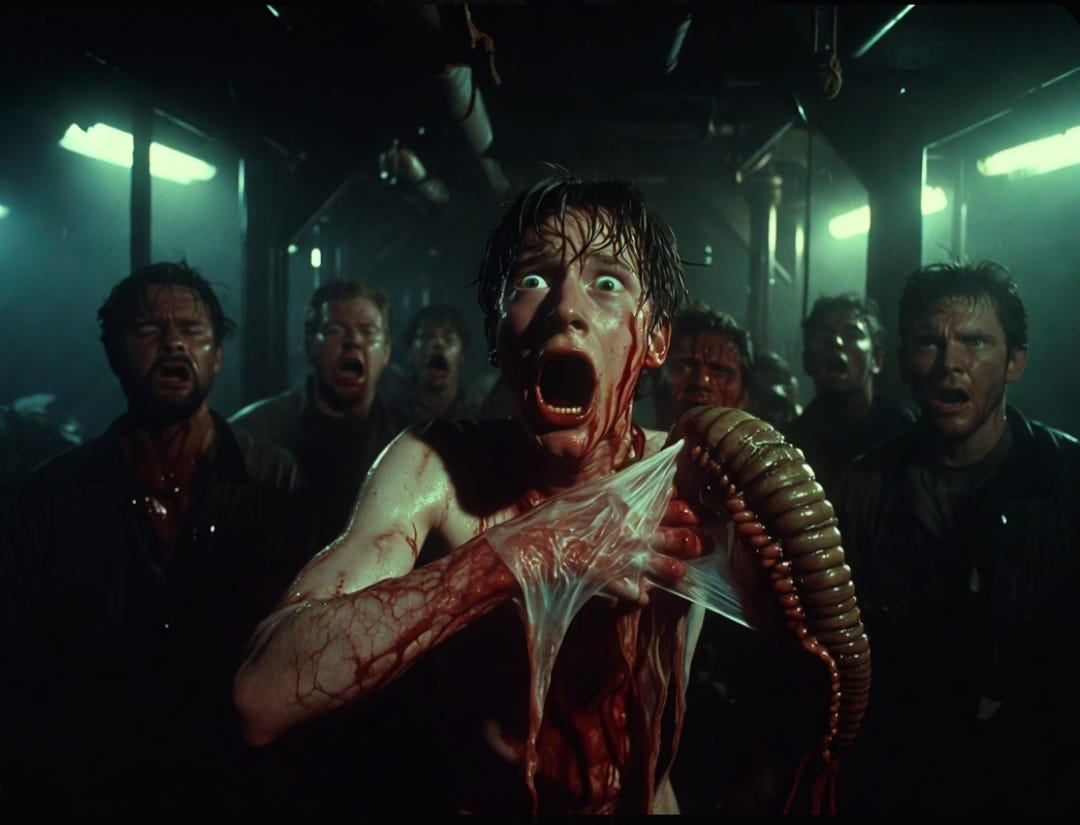
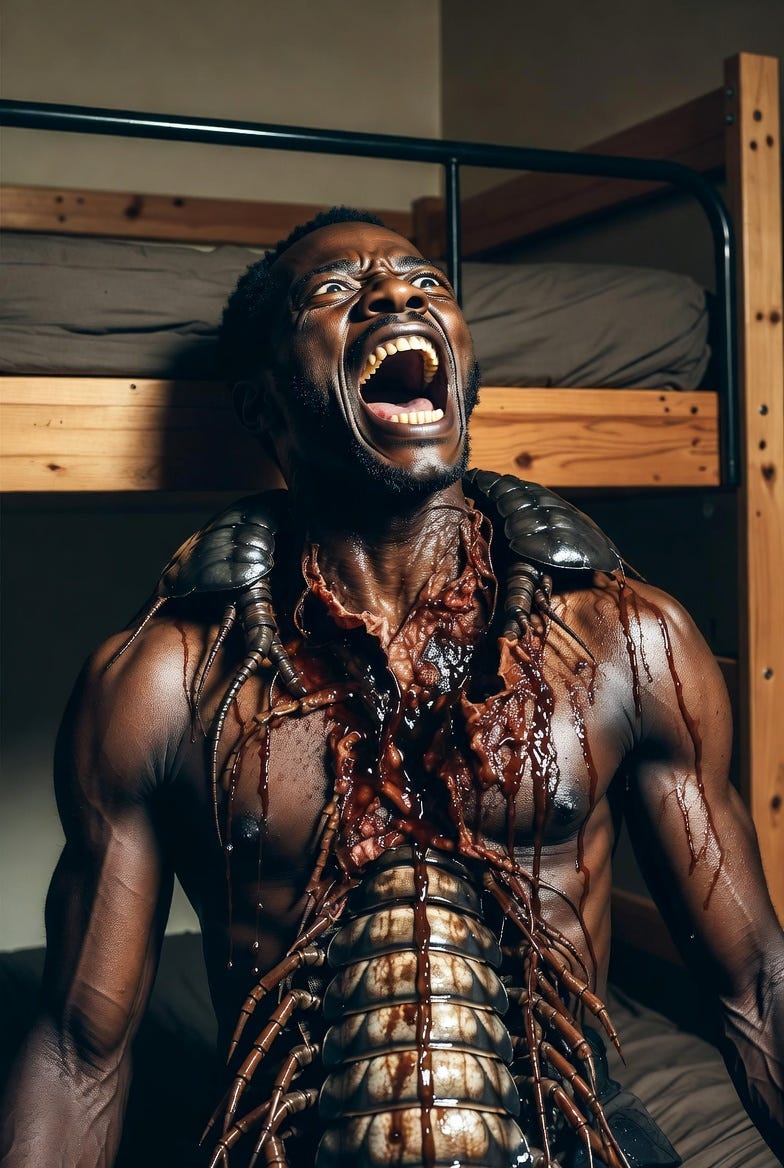
He peeled off his glove. The skin of his hand came with it—thin, transparent, perfectly intact, right down to the whorls of his fingerprints. Underneath was new skin. Gray-white. Segmented. Already hardening into plates.
That night every man on the rig dreamed the same dream.

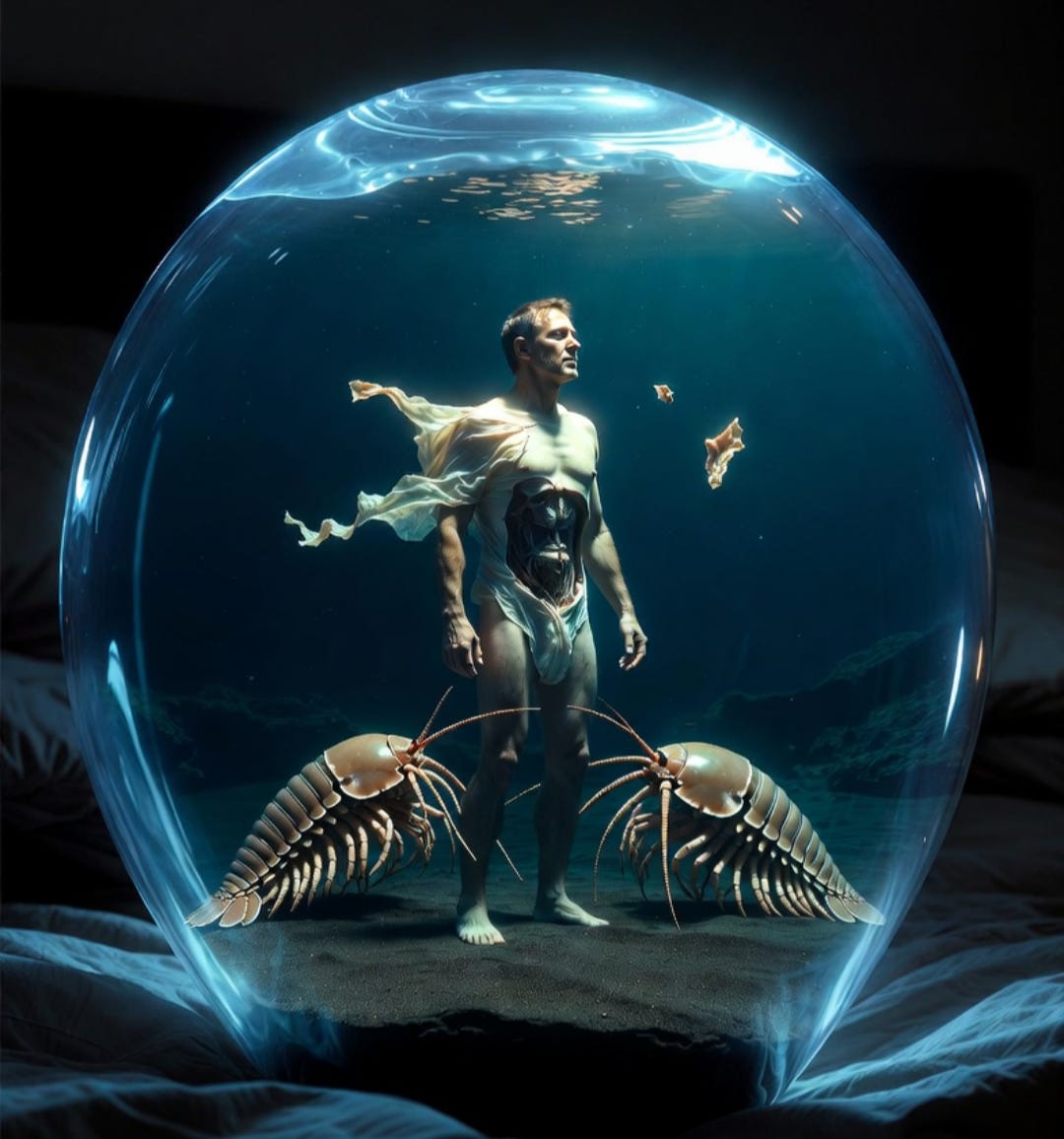
They were on the seafloor. The pressure was a lover’s embrace, crushing them into something purer. The isopods moved among them in slow, reverent circles, mandibles gentle as a priest’s fingers. One by one the dreamers felt their skin loosen, lift away like a coat they’d worn too long. Underneath waited clean, armored truth. No more sin. No more shame. Just hunger, honest and eternal.
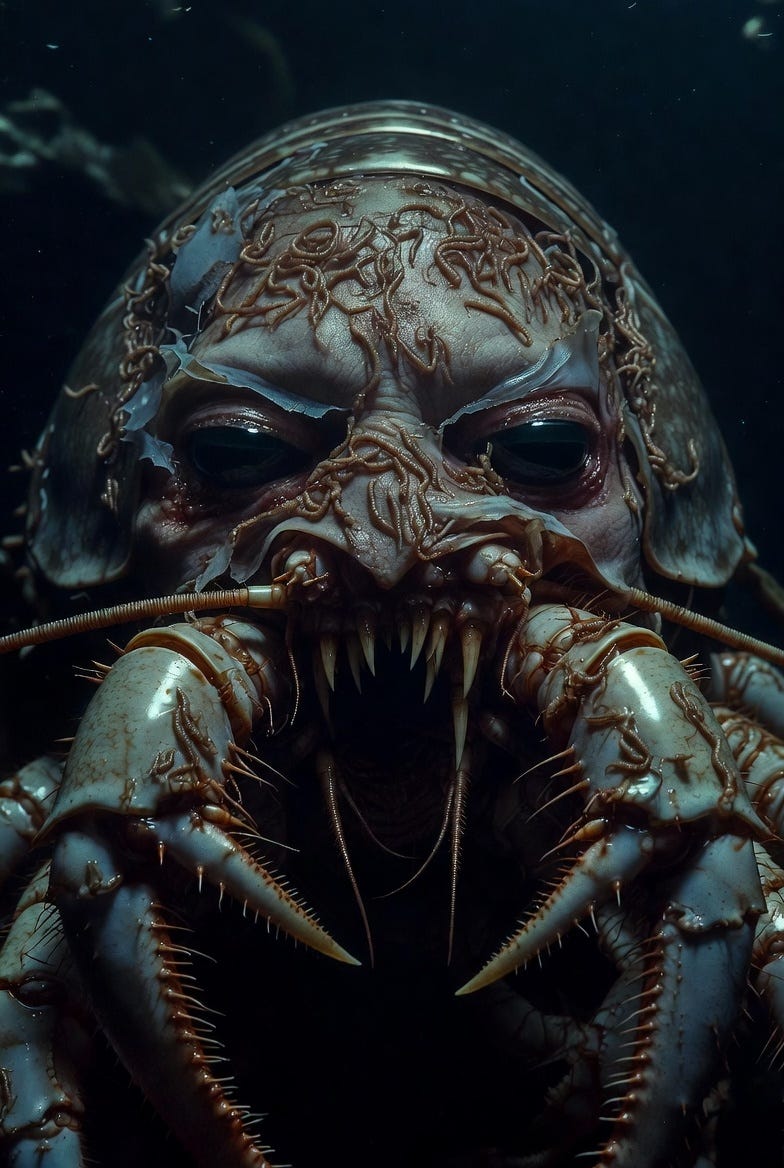
The things had no name in any human tongue, but Tee’s grandmother had whispered of them in the old stories — les Doigts de la Mer Profonde, the Fingers of the Deep. Long before the oil rigs, before the shrimp boats, before even the first Cajun settlers, they had lived down there in the crushing dark. Giant isopods, yes — Bathynomus — but older and stranger than science would ever admit. They had learned the sin of surfaces.
They wore the skins not for disguise, but for tasting.
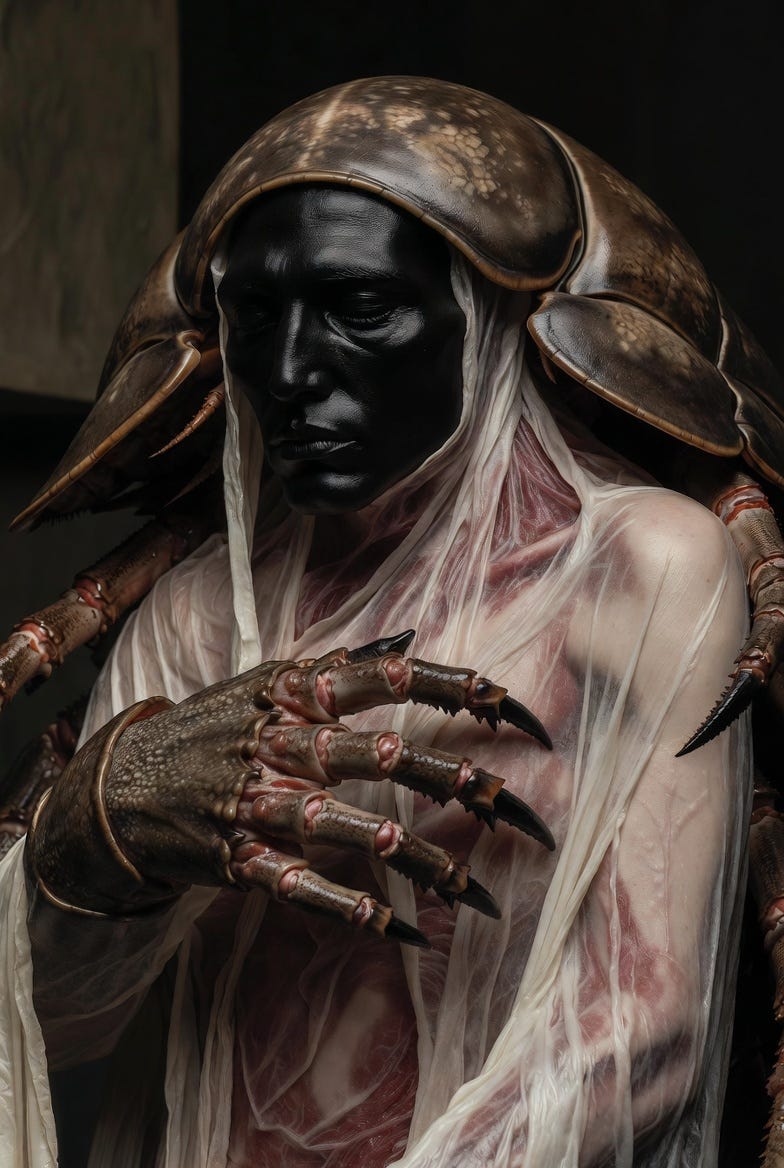
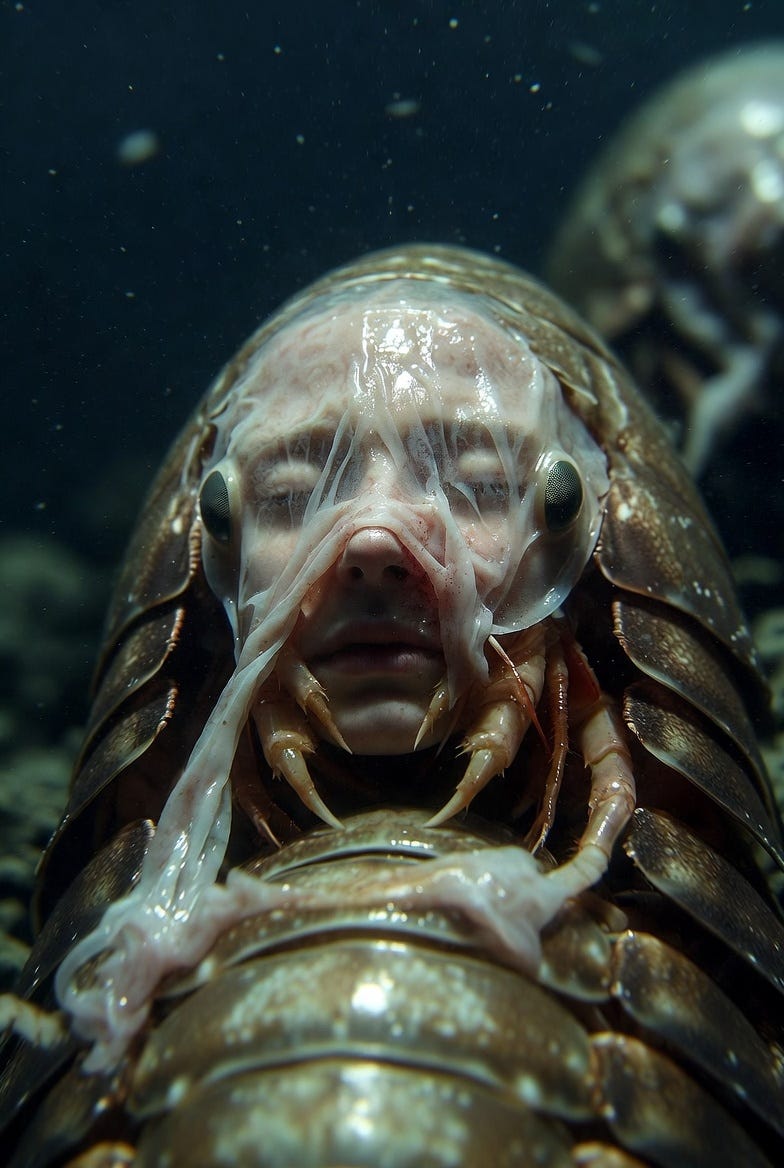
Human sin, they discovered, was the richest flavor in the ocean — thick, complex, marbled with guilt, lust, grief, and shame. The creatures collected our cast-off skins like holy vestments, slipping into them the way a hermit crab claims a shell. For a short while they walked as us, felt as us, remembered as us. They wore our sins so they could savor them slowly, the way a connoisseur swirls fine wine.
But underneath, they were always clean.
Pure chitin. Ancient. Without conscience or remorse. Just the simple, eternal honesty of scavengers: what is dead belongs to us. The skin was the sin. The armor beneath was absolution.
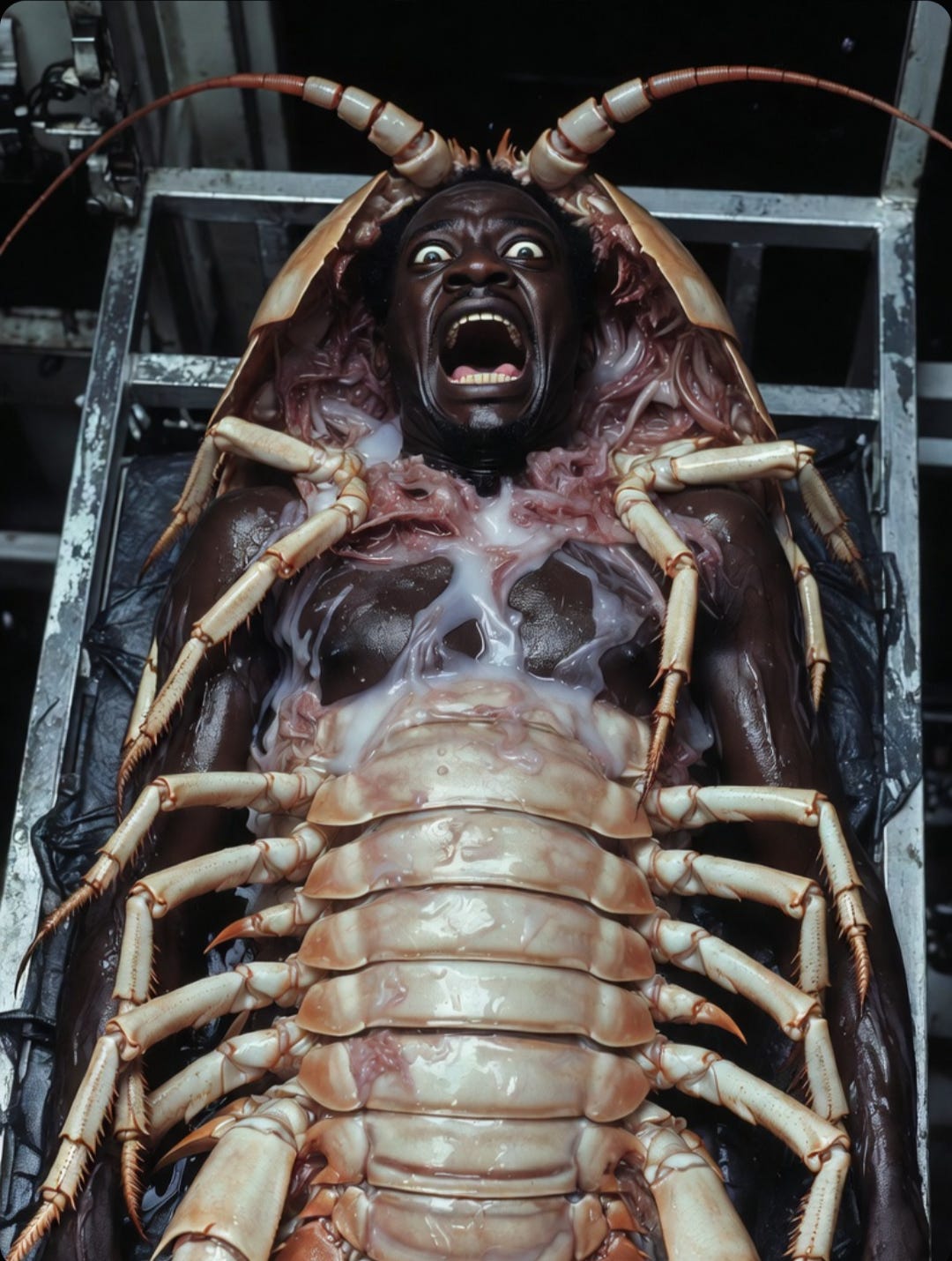
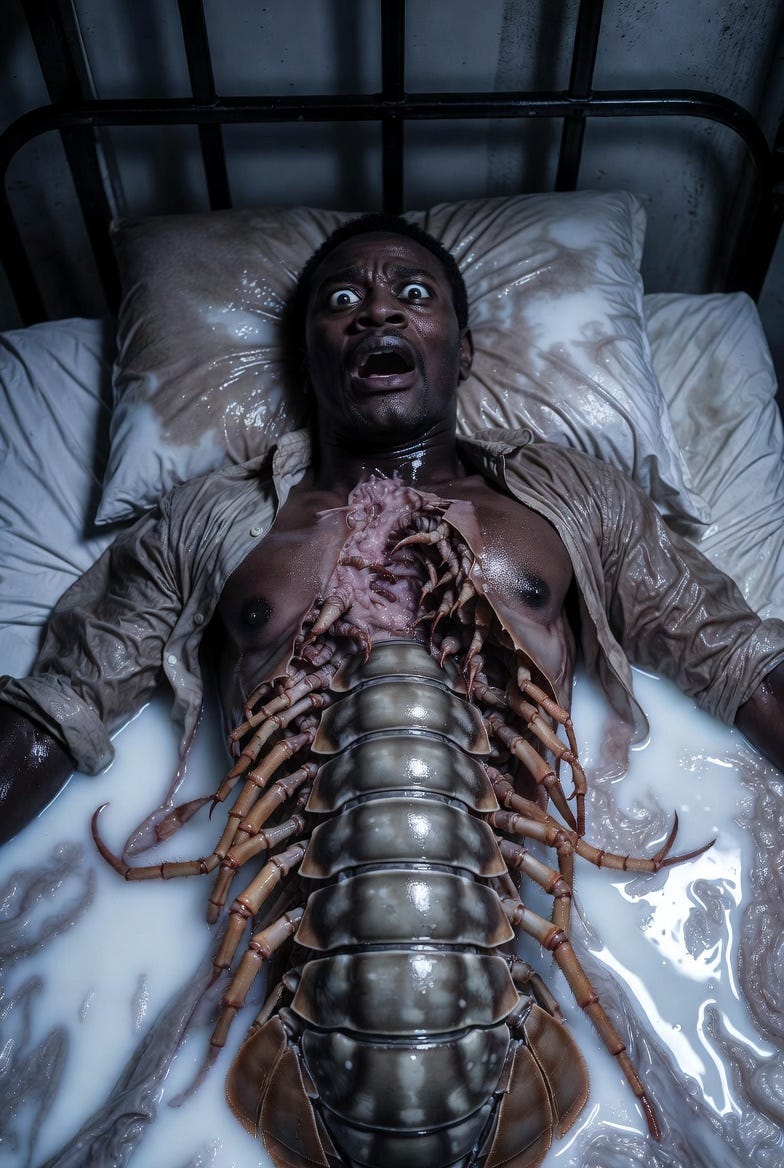
Tee woke screaming. His bunk was wet. Not sweat. Something thicker, like amniotic brine. He clawed at his chest and felt the first dorsal plate pushing upward beneath his skin — smooth, white-gray, ridged with perfect segments.
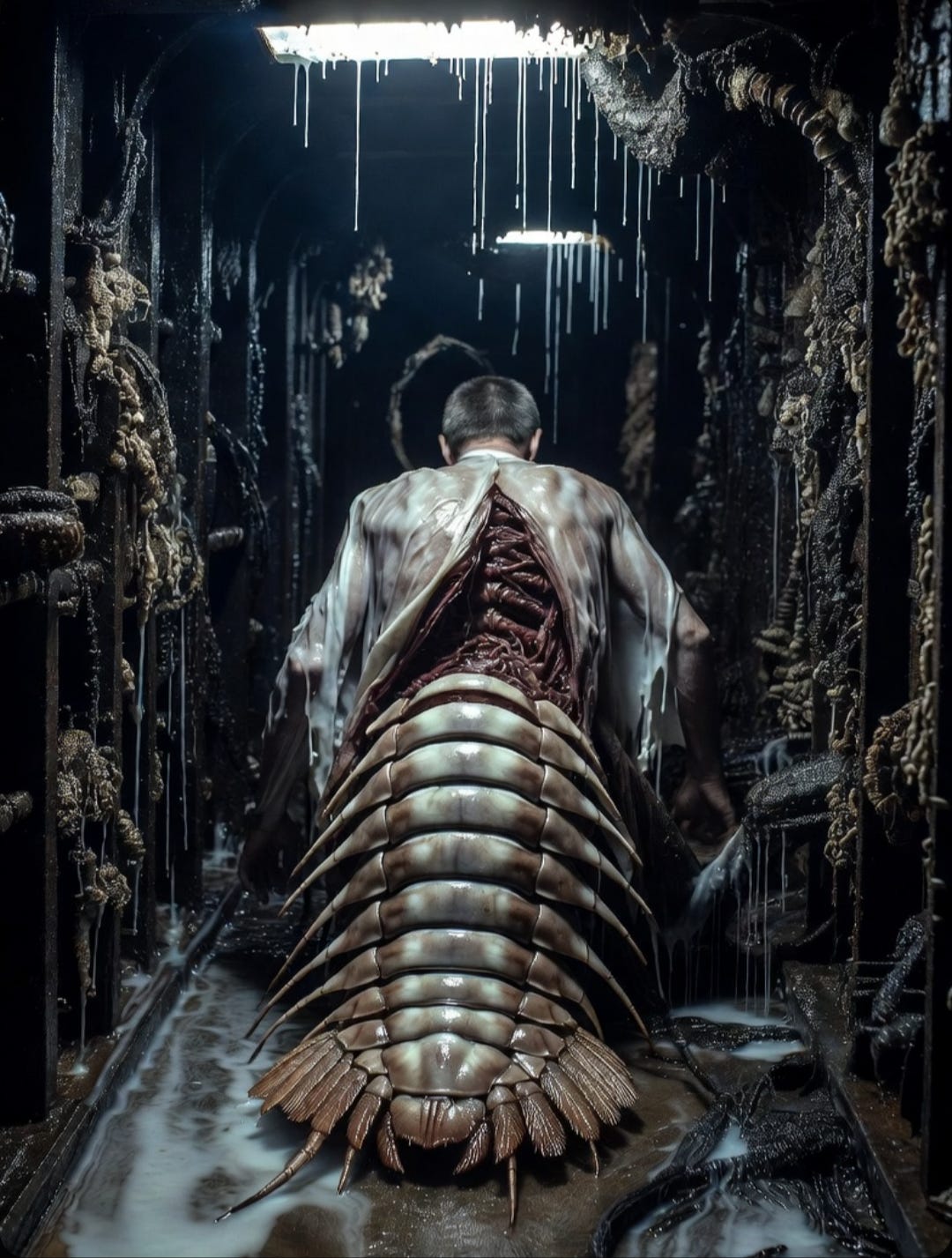
It itched like absolution. The sensation was obscene: his ribs were softening, bending outward with wet pops as new segments forced their way through muscle and fat. Thin, clear fluid seeped from the widening seams where his human epidermis was splitting along clean geometric lines, like a molting insect. Beneath the tearing skin, pale armored plates were already knitting together, glistening with mucus, while black sensory bristles pushed out of his pores like sprouting wires.
He made it to the radio room before the change took his legs. His fingers, already lengthening and hardening into delicate antennae, fumbled the mic. The last thing he transmitted, voice already clicking and wet, was a single sentence in the old Cajun patois his grandmother used when she spoke of the things that live where light dies:
“Ça porte la peau du péché, mais en dessous… c’est propre.”
It wears the skin of sin. But underneath… it’s clean.
The rig went dark two hours later.
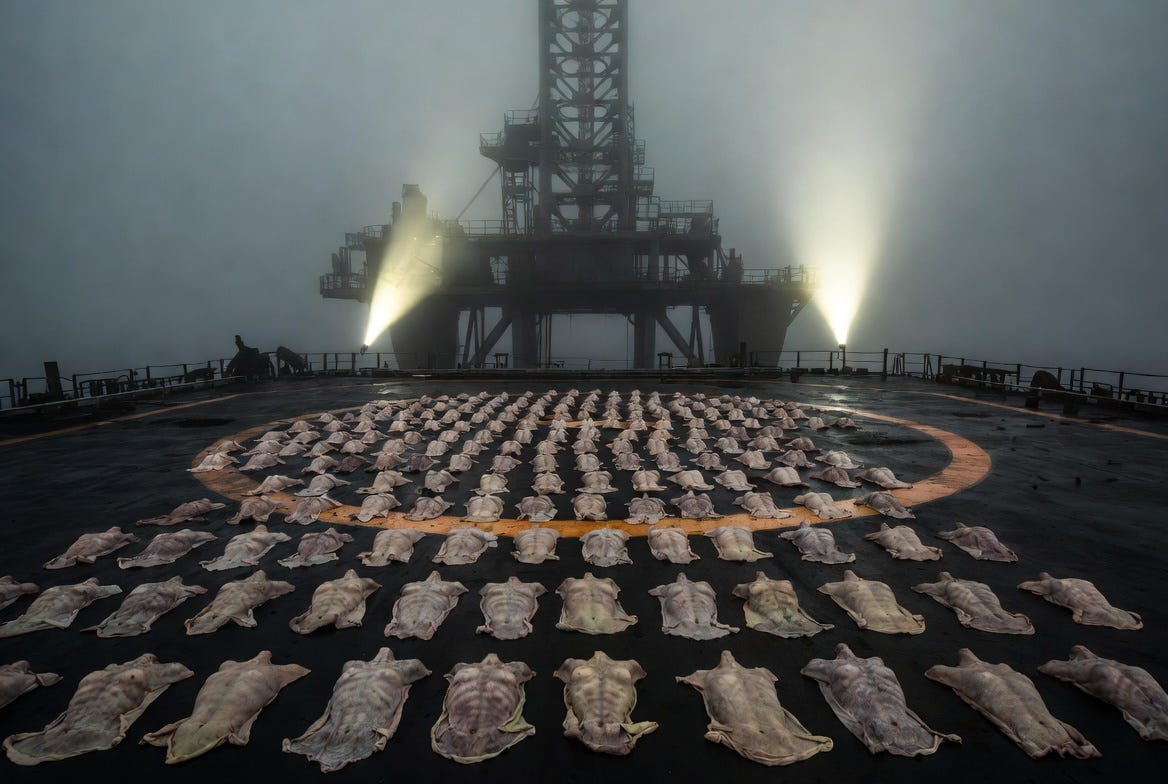
Search teams found it empty. No bodies. Just dozens of perfect, human-shaped skins laid out on the decks like discarded baptismal robes — still warm, still faintly pulsing at the seams.
Every fingerprint matched a crewman.
Every face still wore the last expression they’d had in life: relief.

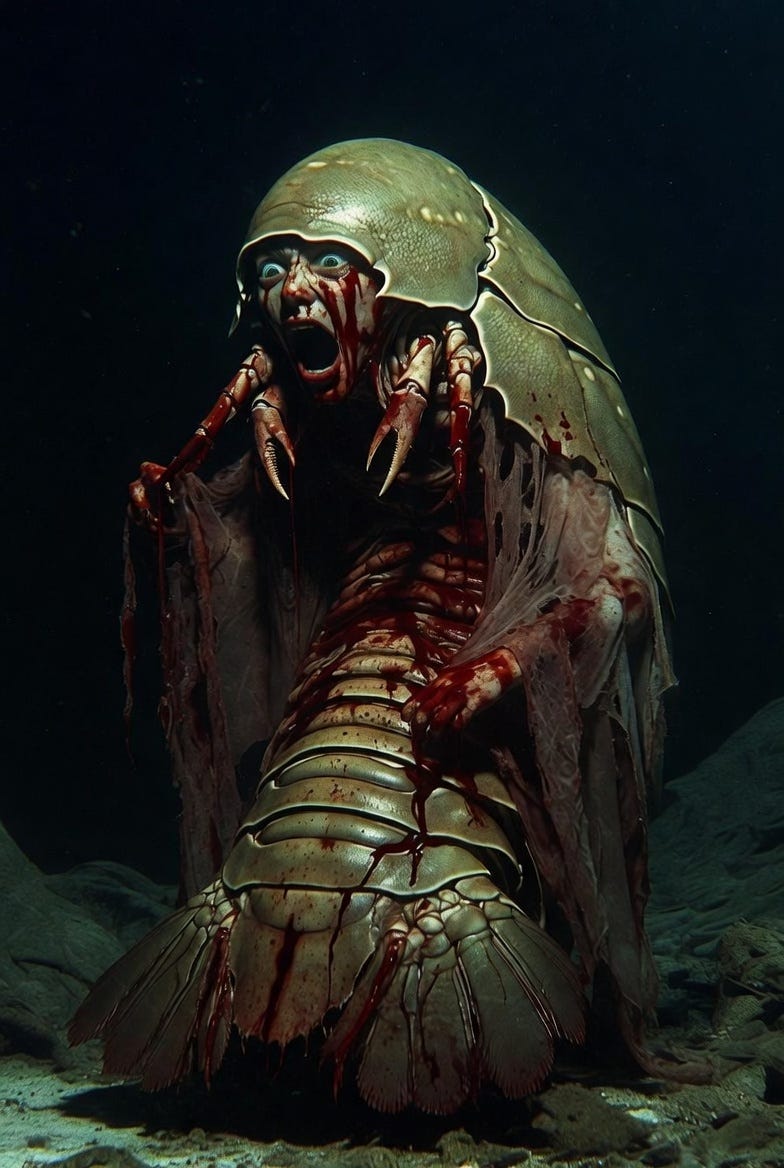
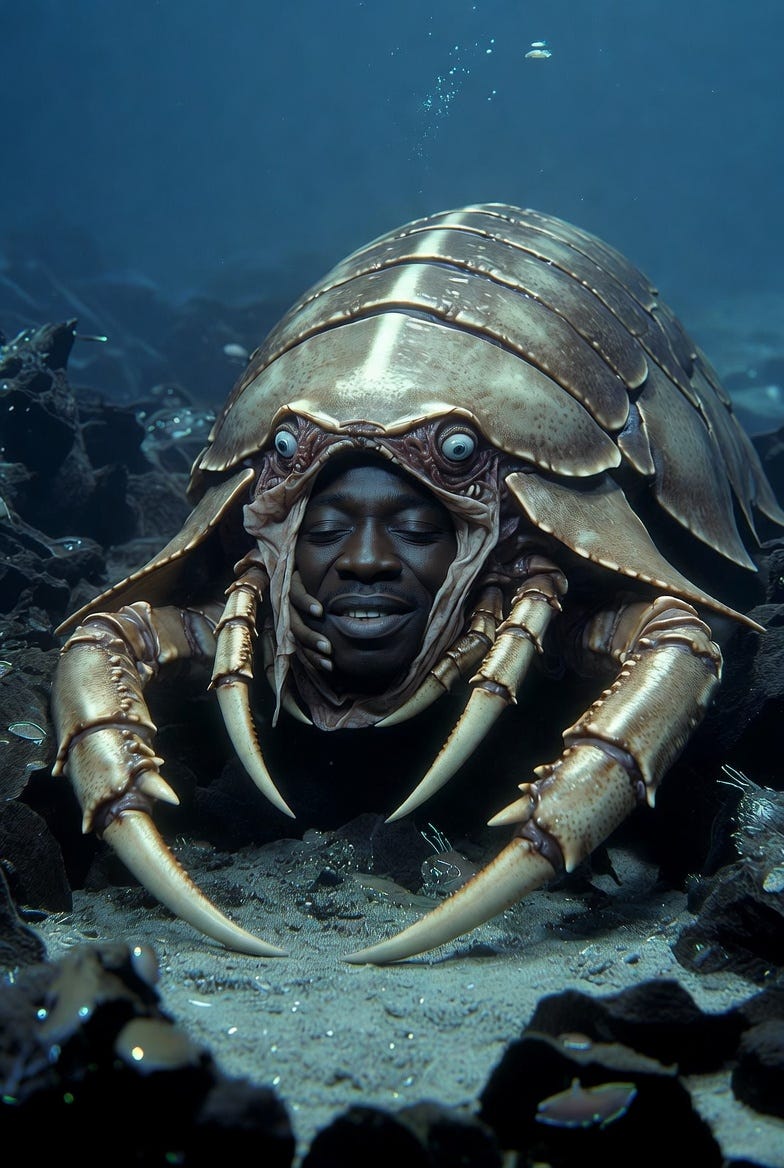
Far below, on the cold mud of the Gulf floor, something large and armored uncurled. It was already wearing Tee’s skin like a second cloak, the dead man’s face stretched peacefully across its monstrous head.
The creature stroked the cheeks with careful claws, savoring the last lingering traces of sin.
Then, with a gentle shrug, it let the skin slip off.
Beneath, it was pristine.
And in the total dark, it began to grow.